This blog post is a repurposed Sip & Search session sponsored by Profound.
AI SEO comes with a growing list of questions.
Should you serve content in Markdown? Do you need llms.txt? Should you care about MCPs, chunking, or token efficiency?
In her Sip & Search session, Miracle Inameti-Archibong argued that these decisions become easier once you understand how LLMs process information.
In this article, she explains how to make your data easier for AI systems to discover, process, understand, and trust.
LLMs do not understand language the way humans do
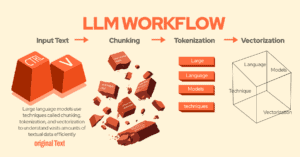
Large language models process text by breaking it into smaller chunks, converting those chunks into tokens, and mapping them into numerical representations.
From there, they predict which words are most likely to come next based on patterns in the data they have seen.
If you write, “There is no crying over spilt…”, the model predicts “milk” because that phrase appears frequently enough in its training data.
This helps explain both the strength and weakness of LLMs. They are very good at pattern recognition, but they can still produce confident answers when the underlying information is incomplete or unclear.
This is why the structure, accessibility, and quality of your data matter so much.
So how do you structure your data so LLMs can retrieve the right information when they need it?
Grounding helps LLMs verify what they know
LLMs do not always rely on their training data alone.
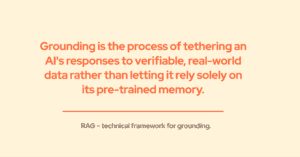
When a question depends on current or verifiable information, they can retrieve information from external sources and use it to support the answer. This process is called grounding.
For SEOs, this raises an important question.
How easy is it for an AI system to find and process your information when it needs a reliable source?
If your pricing, product details, documentation, or other important data is difficult to access, the model may rely on another source instead.
Technical AI SEO starts with making your data easy to process
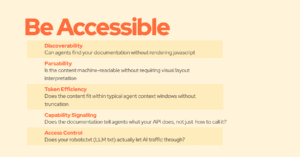
Important content should be discoverable without relying heavily on JavaScript, machine-readable, and structured clearly enough for agents to parse quickly.
Markdown can help because it strips away much of the extra markup that comes with HTML and keeps the useful information easier to process.
This is similar to giving someone the recipe instead of making them search through your entire kitchen for the ingredients.
For larger sites, token efficiency matters too. Agents have limited context windows, so important information should be easy to find and placed where it is less likely to be truncated.
New formats can help agents find the right information faster
AI agents need clear paths to the information you want them to use.
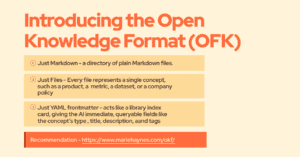
Formats such as the Open Knowledge Format, llms.txt, and agent permission files can make that easier by giving agents cleaner instructions about what content exists, where to find it, and how to access it.
The idea here is to use these tools based on your website’s complexity.
A small site with clean architecture and accessible content may not need every emerging AI format.
A large ecommerce or documentation-heavy site has more information for an agent to navigate, so clearer machine-readable guidance can become more useful.
The goal remains to help the agent reach the right information quickly and reduce the work required to understand your site.
MCPs could become the new log-file analysis for AI agents
We see Model Context Protocols, or MCPs, becoming an important part of how marketers understand AI agent activity.
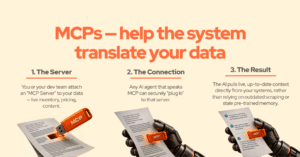
MCPs act like connectors between an AI system and another tool or data source. Instead of relying on old information, an agent can retrieve current data from the system it needs.
For an ecommerce site, this could mean checking live inventory before answering whether a product is available.
The SEO opportunity is in visibility.
Teams may start using MCP data to understand which agents accessed their systems, what they requested, where they encountered errors, and which resources they could not reach.
This is similar to the role log-file analysis already plays in technical SEO.
Make your content easy to include in AI answers
Once your site is accessible, the next step is to structure your content so that LLMs can extract useful information quickly.
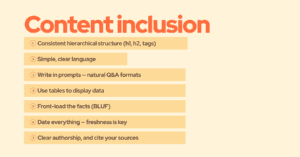
It’s best to keep the basics tight, including:
- Using a clear heading structure
- Writing in simple, direct language
- Answering questions naturally where it makes sense
- Putting important facts early in the page
- Keeping information fresh
- Making authorship and sources clear
This helps LLMs identify what a page is about, pull out the most useful parts, and connect those details to the right topic or entity.
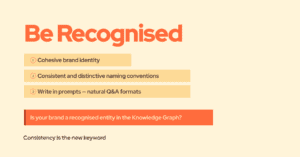
Consistency is the new keyword
LLMs rely heavily on patterns, which makes consistency an important part of how they understand your brand.
If your company, products, people, and services are described differently across your website and other sources, the model has more conflicting signals to work through.
So, keep your brand identity, naming, and messaging consistent across owned media and trusted third-party sources.
This also strengthens entity recognition. The clearer the relationship between your brand and the topics you want to be known for, the easier it is for LLMs to associate you with them.
Authority still matters in AI search
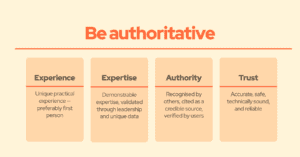
After accessibility, structure, and consistency, LLMs still need reasons to trust the sources they use. This is where experience, expertise, authority, and trust still matter.
- Firsthand experience gives you information that is harder to copy.
- Expertise helps you explain a topic with depth.
- Authority grows when other trusted sources mention and cite your work.
- Trust comes from being accurate, transparent, and technically reliable.
For brands, the goal is to become a source an LLM can confidently return to when it needs to ground an answer.
Start with the fundamentals before chasing every new AI tactic
AI search keeps introducing new formats, tools, and technical debates.
Start with the logic behind how these systems work first, then make your content easy to discover and process, clear enough to understand, consistent across sources, and authoritative enough to trust.
From there, you can decide whether things like Markdown, llms.txt, MCPs, or other emerging formats make sense for your site.
Watch Miracle Inameti-Archibong’s full Sip & Search session for the complete presentation.